Importing from China to the European Union (EU) has loads of advantages for ecommerce businesses. If you’re looking to scale your business, importing from China is a great strategy as manufacturers are equipped to handle large orders. Plus, you can find a wide variety of low-cost products from specialised manufacturers.
The higher profit margin comes with some drawbacks, primarily the complex process of finding the right supplier. This quick start guide is here to take some of the guesswork out of the process, so you can concentrate on brushing up your language skills.
What do I need to look for when sourcing suppliers as an EU buyer?
It’s recommended that you work directly with a manufacturer when importing from China. If a supplier offers products in lots of categories, they’re likely to be a reseller, rather than a factory. Working with a reseller has some disadvantages:
- – The chance of miscommunication increases with a reseller between you and the actual factory
- – Manufacturers will know better than a reseller what they can offer you (like what personalisation to the product they can do)
- – Resellers cost more than going direct
Does the manufacturer have any verifications? If you’re shopping through Alibaba or Global Sources, they have Verified Suppliers that you can browse. You can also ask for evidence of certifications like ISO Standards or any specific certifications you need for your specific product. The gold standard is factory tours. If this is out of your budget, maybe consider hiring an agent to go on your behalf. You can also ask for photos as an alternative.
Don’t get caught out by lead times. Ask how long production will take and then add the shipping duration to your timeline. If you’re ordering in advance of a certain date (say Black Friday), you’ll need to make sure your goods will arrive on time.
Most importantly, you need to ensure your supplier can comply with EU regulations. A good way to narrow the field is to find manufacturers already shipping to the EU.
Do goods imported from China need to comply with EU product regulations?
It might sound obvious, but the EU’s regulations don’t apply outside the EU. A factory in China is not responsible for ensuring compliance with EU law. Instead, you – the importer – are responsible for product compliance. In the best-case scenario, non-compliant goods will be seized at the border.
All products are regulated and must comply with one or more of the following:
- – Product directives (i.e., EN 71)
- – Chemical restrictions (i.e., REACH)
- – Labelling requirements (i.e., CE mark)
- – Document requirements (i.e., Declaration of Conformity)
- – Lab testing
Following EU standards will help your goods pass through customs, but the effort of compliance is more than box-ticking. European Standards are an important part of the EU’s single market and as such, EU consumers have come to expect a certain level of quality from the products they buy. Products that fail or barely pass the standards are unlikely to make repeat customers.
How do I make sure I get the right product quality?
China is one of the world’s leading manufacturers. With the right product specifications, anything’s possible. Manufacturing requires specific dimensions, technical standards and tolerances. The more precise you can be, the closer the end product will be to what you imagined. Even the simplest products must be defined in product specifications.
You’ll get what you ask for – literally. You’ll need to define your desired product as precisely as possible. There’s no part of your product that you can overexplain. Visual aids like 3D models are the gold standard, but even if you have them, a product specification should still include things like:
- – What function, if any, it needs
- – Material types
- – Colour choices (Pantone, RAL)
- – Component types (model, brand, etc)
- – Weight
- – Dimensions
This is the stage to specify any certification or regulations your product must meet.
Any information you don’t provide the manufacturer will fill in with their best guess. For example, listing “wood” for the material isn’t specific enough. The manufacturer will choose what kind for you, and that might not always work in your favour.
Because the process works this way, always request samples before purchasing bulk orders. You’ll likely have to pay for the sample, but you might be able to negotiate a refund on the sample if you go on to make a purchase.
How do I get the products shipped from China to Europe?
There are two primary methods of transporting your goods to the EU: sea freight and air freight. Air freight is much faster (around 7 days), but costs more per kilogram. There are also restrictions on what can be transported via air. For example, perfume and speakers are considered hazardous.
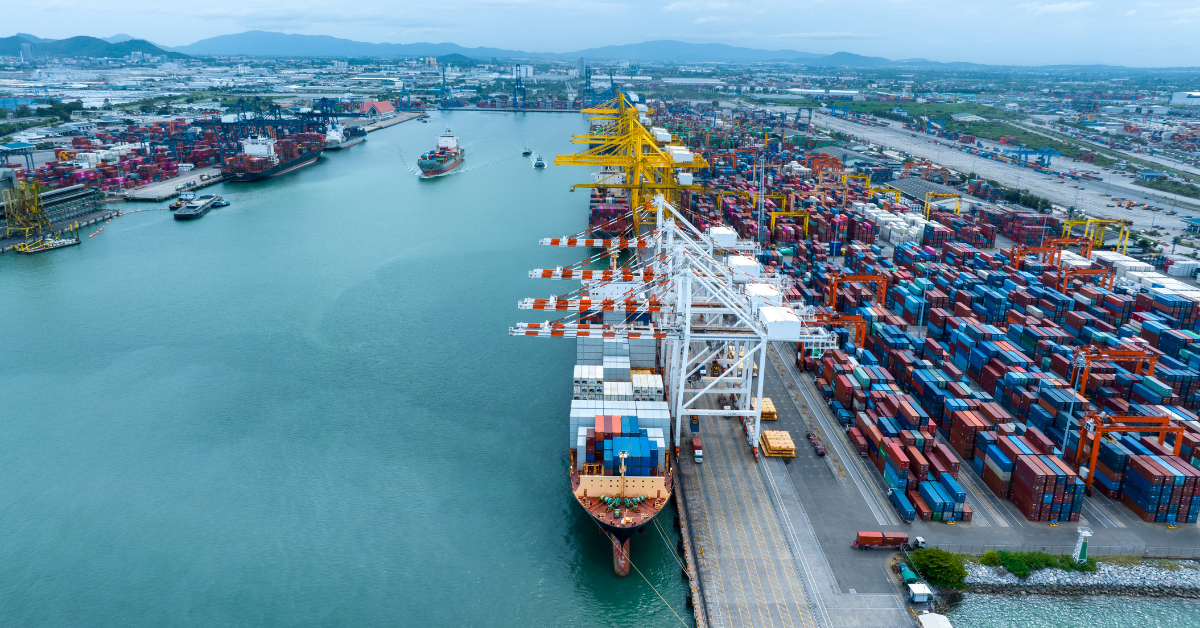
Sea freight usually takes between 30 and 32 days to most ports in the EU. However, it’s much cheaper and offers much greater capacity. You can book the shipment with your supplier or work with a forwarding company.
Rail and road freight options are available and act as the middle ground between Air and Sea. Rail freight can take up to 17 days depending on where you’re shipping from and to.
You can either work with your supplier to book the shipment or go through a European freight forwarder, with offices in China.
How much Import VAT and Duty will I pay?
When your goods arrive at the EU border, they’ll be evaluated to determine their Customs Value. This number will be the basis on which Import VAT and Duties will be calculated. The primary method for working out the Customs Value is to use the transaction value. That’s the amount you paid for the goods, which includes:
- – Costs you’ve incurred that aren’t included in the paid price, such as commissions, brokerage costs or the cost of containers
- – Any royalties or licence fees related to the value of the goods, when you paid them as part of the condition of sale
- – Any money you make from reselling, using or disposing of the imported goods
- – Any royalties or license fees related to the goods, which you must pay as a condition of selling them
- – The cost of transport (and related costs) up to the point where the goods enter the EU’s customs territory
The Customs Value doesn’t include:
- – Buying commission
- – Any transport costs after your goods have entered the EU
- – Import Duties or any other taxes due because of the import
- – Any seembly or maintenance charges incurred after the entry into the EU
- – Interest charges
How are Customs Duties and Import VAT calculated?
The Customs Tariff is the name for Import Duty and any additional tariffs required by law. The amount you pay is a percentage of the Customs Value. What percentage you pay depends on two things:
- – What Harmonised System (HS) Code your goods fall under. The EU uses the Tarif Intégré Communautaire / Integrated Tariff of the European Communities (TARIC) system, which builds on the HS codes
- – The country or territory you’re importing from
Import VAT is also a percentage of the Customs Value. Each EU Member State has their own VAT rates, so typically what you pay will depend on where your goods cross the border into the EU. You pay Import VAT on the combined Customs Value and Customs Tariff amount. For example:
Customs value: €1,000
Customs duty: €50
Import VAT rate (e.g., 20%): You would pay VAT on €1,050 (the customs value + duty), which would be €210 in this case.
If you’re using a freight forwarder, they’ll be able to handle the customs and VAT declarations on your behalf. Instead of you doing all the paperwork, you’ll get an invoice at the end, which includes the VAT and the Import Duty.