International ecommerce sales in Europe are increasing year on year, but how can you take advantage of the trend? What are businesses doing to get more ecommerce sales in Europe? The key is knowing your target market, and their expectations, then finding ways to meet them.
Know who you’re selling to
Ultimately, good market research will make the difference in getting more ecommerce sales in Europe. It’s tempting to treat the continent or the EU as a cultural monolith, but consumer expectations vary drastically from country to country. Here are a few places you can start with your research:
Look at your competitor’s reviews
Your competitor’s reviews will show you where their service failed to match their customer’s expectations. You’ll have a picture of the local consumer standard.
Investigate social media
Social listening is the term used to describe monitoring social media for conversations about your brand, your competitors and your industry. It can give you a broader picture of what real people expect of a product or company than reviews but it requires a greater time investment.
Utilise what you’re already doing
Research doesn’t need to be expensive. If your business’ primary advertising language is English, you can test your offering in English across Europe before investing in translation. This will allow you to gauge demand without the extra spend.
Europe Relies on Reviews
Product reviews are increasingly important to consumers looking to make a purchase. Depending on who you ask, anywhere between 75-93% of Europeans feel like customer reviews impact their decision to buy. To get more ecommerce sales in Europe you need honest reviews and to display them where your customers can see them.
Most people won’t bother to translate a review to read it. You have two options: translate them for them or collect reviews in your target market’s language.
Google Maps automatically translates reviews on their platform, and you can use translation software to translate your website. As reviews are so important for building trust you might want to invest in human translation for those that you’re going to use prominently, say in ads or social media. Machine translations can’t capture the tone or context provided by a human.
The best thing is to begin the process of collecting product reviews from native speakers. It’s the most authentic option and provides your target market with a deeper insight into how your product will fit in their lives.
Reviews don’t just have to sit next to product listings – though that’s a great place to put them. Trustpilot found that in Europe an Ad with a client review will outperform the same Ad that promises new users a EUR 100 welcome reward. That means a greater click-through rate for your advertising, plus you might not need to lean on promotions and discount codes to boost conversions.
Honest reviews drive sales and build trust. In May 2022, the EU implemented the Better Enforcement and Modernisation Directive, part of which made buying, selling, or submitting fake reviews illegal. Each EU state adopted the Directive and has added its own rules on top. In Spain, non-compliance can lead to fines of up to EUR 1,000,000.
Shipping Orders Across Europe
You won’t be surprised to hear that shipping is just as important for generating more ecommerce sales in Europe as it is globally. The good news is that you have a little leeway. In general, Europeans are happy with longer shipping times if they know their purchase was made with an international brand.
The cost of shipping is decreasingly a factor for Europeans when it comes to purchasing decisions. However, how important it is varies quite significantly from country to country. Between Switzerland and the Netherlands, the difference in 2022 was 10%. Consumers consider the price of shipping next to reliability and speed. Whilst all three are important it’s worth diving into the statistics for the specific countries you’re targeting. In France in 2022 speed of delivery was reported as more important than reliability, which was the opposite of the continent as a whole.
Sustainability
In 2021, Zalando, a German fashion ecommerce platform found that 90% of Gen Z consumers think that businesses have a responsibility to “protect the environment and make a positive social impact”. Europeans, especially younger ones, are looking for sustainable options when shopping online. What opportunities does this present for your business?
If your products are sustainable (or have sustainable elements) highlighting this could lead to greater sales. In the same 2021 research, Zalando demonstrated that transparent labelling and categories for sustainable products increased the percentage of customers buying at least one sustainable product from 18% to 50% in one year.
Packaging makes a significant impact on a customer’s perception of how sustainable your brand is, as they handle it when your goods arrive. In Europe, it’s very possible to have a perfect sales experience and still lose what would be a repeat customer (and therefore a more profitable customer) because a competitor uses less plastic in their packaging.
Shipping isn’t immune from sustainability scrutiny either. The good news is that it doesn’t have to cost you a lot to make a change.
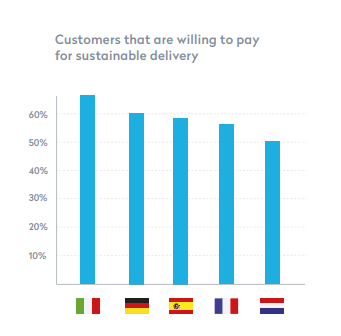
Consistently, more than half of Europeans would pay more for a more sustainable shipping option. Pick-up-and-drop-off options are typically cheaper for you to provide and reduce the amount of traffic associated with delivery. Communicating the environmental benefits of these options to your customers will help make them repeat purchasers.
Optimise your website for European customers
Page speed is a major factor in both getting your page ranked on Google and converting customers. A fast website therefore is the goal, and it’s especially important in the context of your target country’s average internet speeds. Most European countries, on average, have slower internet speeds than the USA and China. Romania’s median download speed is 275mbs, but in Greece it’s 49mbs. What might load fine in one country might not in another.
The same goes for mobile connection, which varies wildly across the continent. You can check your page speeds for free with Google’s PageSpeed Insights. It’s important because mobile sales accounted for 55% of online sales made in the UK in 2022 and the figure is growing across the continent.
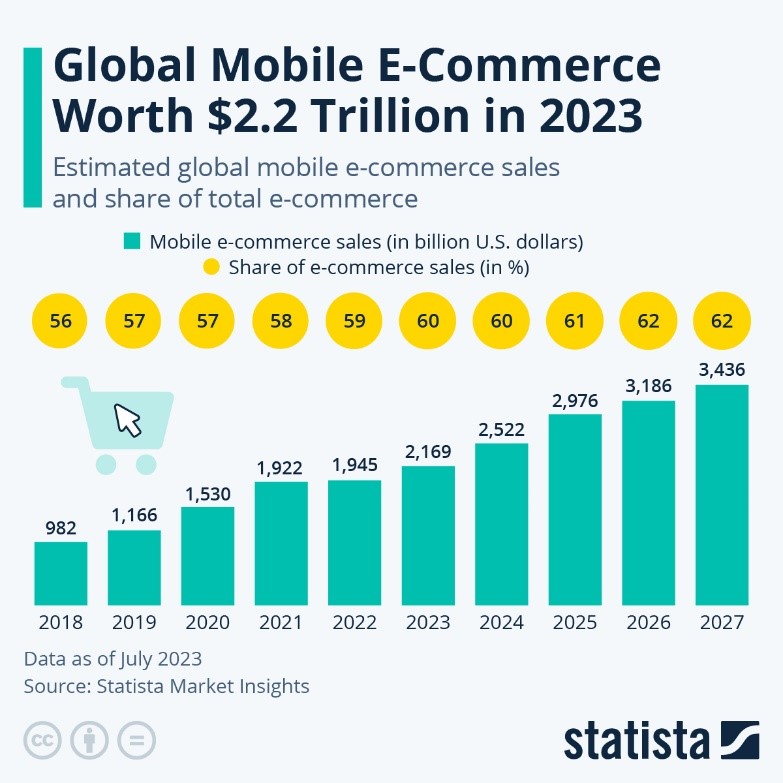
Making sure your site loads quickly on mobile is only the beginning though. It seems basic, but making sure your website is navigable on mobile is commonly overlooked. Do your pop-ups fill the whole phone screen, or do you have clickable features not designed for touchscreens? Fix these problems and you’ll keep your potential customers on your site for longer (and raise those all-important conversion rates).
Accessibility standards are different across the globe and depending on where your business is based, you’ll have varying legal obligations. The EU’s standards are backed by a cultural expectation, so whilst you might not be legally obligated to do so, making your website as accessible as possible will have implications on your sales in Europe. Plus, Digital accessibility affects your website’s SEO. You can check your accessibility score for free at accessibilitychecker.org.
Supporting your store’s growth
We’ve got plenty of resources to help you grow your business into and across Europe. If you’re just thinking about it, here’s a look at what you should be considering when putting your strategy together.
Even if you’re only planning to move stock around the EU, you’ll know that VAT in the EU is complicated (and that’s before you’ve even made a sale!). We’re making it simple. Check out our free EU VAT Guide designed just for Ecommerce sellers here.
If you found this article useful, you might like our newsletter. We send our community industry news, VAT guides and ecommerce tips once a month. Subscribe for free here.