When January 1st, 2021 arrived, the United Kingdom (UK) had finally left the European Union (EU). As a result, the way we account for VAT between the UK and EU has changed.
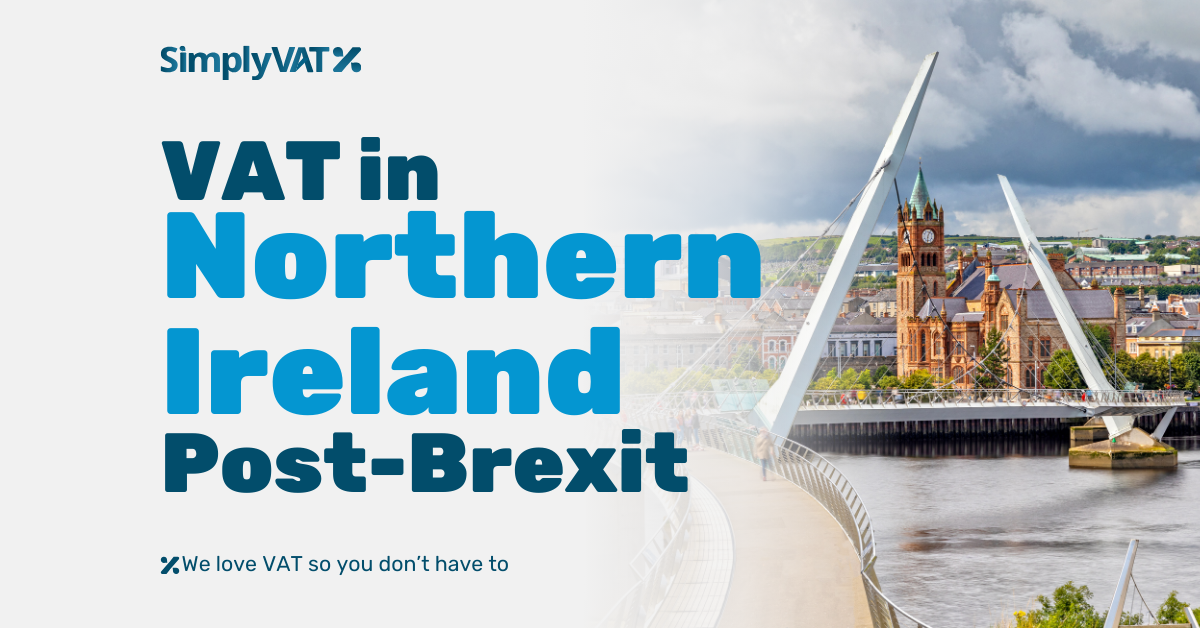
The border between Northern Ireland and the Republic of Ireland is the UK’s only land border with the EU. As part of the effort to avoid a hard border, Northern Ireland was granted a special VAT status.
Before we get into the thick of it, it’s important to understand the difference between the United Kingdom and Great Britain (GB). They’re often used interchangeably but mean different things. Great Britain refers to the countries of England, Wales and Scotland. The UK’s full title is “The United Kingdom of Great Britain and Northern Ireland”.
A special status for Northern Ireland
The Northern Ireland Protocol is a part of the UK’s Withdrawal Agreement and is important in safeguarding the Good Friday Agreement. For VAT purposes, the Northern Ireland Protocol means Northern Ireland remains aligned with EU VAT rules on the supply of goods. Essentially, Northern Ireland will be subject to a dual VAT system. The EU VAT legislation for the supply of goods between Northern Ireland and the EU on the one hand, and the UK VAT rules for services on the other.
HM Revenue and Customs (HMRC) remain responsible for collecting VAT in Northern Ireland. The UK VAT return hasn’t changed, and all UK sales continue to be reported on it.
A new prefix to use in front of your GB VAT number
Both EU and UK VAT legislation applying to Northern Ireland at the same time meant that a new VAT number prefix needed to be created: XI. HMRC automatically issues XI VAT numbers to all traders identified under the Northern Ireland Protocol. You can also apply to HMRC for a XI VAT number. In certain circumstances, you’ll need to use ‘XI’ instead of ‘GB’ in front of your VAT number:
- – If your goods are in Northern Ireland when a customer buys them
- – If you’re receiving goods in Northern Ireland from VAT-registered EU companies for business purposes
- – If you’re selling or moving goods from Northern Ireland to an EU country
In these cases, the ‘XI’ prefix will have to be provided to the EU customer or supplier, including on invoices.
Northern Ireland, IOSS and OSS
In July of the same year that the UK left the EU, new EU VAT measures came into effect. As Northern Ireland follows the EU VAT rules for goods, One Stop Shop (OSS) and Import One Stop Shop (IOSS) apply as well. Under the Northern Ireland Protocol, the UK is responsible for running these schemes.
The EU-wide distance selling threshold of EUR 10,000 also applies to businesses based in Northern Ireland. Whether you’re based in Northern Ireland or the EU, all your cross-border sales in the EU and Northern Ireland count towards the threshold. Once you’ve passed the threshold, you’ll have to pay VAT in the countries where your customers are based. You can either register for VAT in each country individually or register for OSS. If you expect to cross the threshold, you can register for OSS voluntarily from the date of your first sale from Northern Ireland to the EU.
ECSL, Intrastat and Northern Ireland
A European Community Sales List (EC Sales List or ECSL) is required when selling goods from Northern Ireland to another business VAT registered in the EU.
Northern Ireland also has Intrastat thresholds. If your business surpasses GBP500,000 in the net value of goods arriving in Northern Ireland (Arrivals) or £250,000 leaving (Dispatches), you’ll have to file an Intrastat Report. Once you’ve passed the threshold, you need to contact HMRC, who will confirm the start date for your reporting. They’ll cross-reference your ECSLs, and VAT returns and let you know if there are any “special arrangements”.
EU VAT Marketplace Rules in Northern Ireland
The EU VAT changes affecting sales made on a marketplace apply to goods being imported into Northern Ireland. It’s not dissimilar to the ecommerce VAT rules that apply to the rest of Great Britain.
Online marketplaces can be considered the ‘deemed supplier’ in specific circumstances, meaning you might not be responsible for collecting the VAT. Marketplaces will collect the VAT on your behalf if you’re a non-resident supplier and:
- – You sell goods to Northern Ireland from GB
- – You sell goods B2C to Northern Ireland in shipments with an Intrinsic Value of less than GBP135 (EUR150), that are outside the EU at the point of sale
- Marketplaces won’t take responsibility for the VAT on sales:
- – Made by UK resident suppliers
- – When the Intrinsic Value exceeds GBP 135, (normal customs procedures will apply)
- – From Northern Ireland to the EU, when the seller is established in Northern Ireland.
Northern Ireland and VAT for Ecommerce Sellers
It’s often easier to understand the rules when they’re applied to real life. Here are some common examples showing goods being sold into, out of and through Northern Ireland.
Importing goods into Northern Ireland with an Intrinsic Value up to GBP135
For low-value goods – orders valued up to GBP135 / EUR150 – you can register for IOSS, but only if the goods are outside the EU when the customer made their purchase. That includes goods stored in Great Britain. If your business is based in the UK, you can account for the VAT on your local VAT returns.
In brief, registering for IOSS means you commit to collecting VAT from the customer at the point of purchase, reporting and remitting that amount to the tax authorities. By doing this, you prevent the order from being held at customs until your customer pays the VAT due.
Orders with an intrinsic value over GBP135 / EUR150 can’t be reported on IOSS, so you’ll need to use an alternative like Delivery Duty Paid or Delivered at Place.
No changes apply to goods imported in consignments valued more than GBP135 as import VAT will still be due under the same process as it currently is.
Selling Goods into Northern Ireland through an Online Marketplace
Online Marketplaces like Amazon and eBay are considered the ‘deemed supplier’. This means that in two circumstances, you’re not responsible for collecting or reporting the VAT on your sales to customers in Northern Ireland (assuming you’re a non-resident supplier):
- – Your goods are in Great Britain when your customer in Northern Ireland buys them
- – Your goods are in Northern Ireland when your customer in Great Britain buys them
In both scenarios, the sale has to be a B2C (business-to-consumer) transaction. B2B (business-to-business) sales have a different set of rules.
Moving Goods Between Great Britain and Northern Ireland
When goods cross the border between Great Britain and Northern Ireland, the goods have to be declared at customs. VAT will be accounted for under the reverse charge if the goods are used for taxable sales.
Moving Goods between Northern Ireland and EU Countries
Intra-community is a term used by the EU to describe B2B transactions and the movement of your own stock between EU countries.
Rather than imports and exports, moving goods between Northern Ireland and EU countries is considered to be either:
- – An intra-community supply
- – An acquisition
For example, when your goods leave Northern Ireland for their new storage space in Germany, that’s an intra-community supply from Northern Ireland.
Simplifications that apply to intra-community transactions (like Triangulation) also apply to the movement of goods involving Northern Ireland.
Selling Goods from Northern Ireland to Customers in EU Countries
Ecommerce businesses in Northern Ireland can use One Stop Shop to report B2C distance sales to customers in EU countries. In this case, OSS can only be used to report the sales of goods, not services. If you’re based in Northern Ireland, you can apply for OSS through HMRC.
Moving Goods from GB to the EU, through Northern Ireland
If you move goods from GB through Northern Ireland to an EU country, how the VAT is handled will depend on the specific circumstances between the buyer and seller. You’ll need to know exactly where the legal ownership of the goods has changed (we can help you work it out).
Selling Goods to GB from the EU through Northern Ireland
When your goods enter Great Britain, you may have to pay UK Import VAT. Whether you do, and how much, will depend on the value of the goods, who the end buyer is and what the agreement with them is.
If you are based in the EU and not selling via a marketplace, you would need to register for VAT in the UK and account for the VAT on your UK VAT return.
The Windsor Framework
In March 2023 the Windsor Framework was agreed by the UK and the EU. When it came into effect in October that year, it amended the Northern Ireland Protocol. The framework was designed to address political concerns that the Protocol was, in effect, isolating Northern Ireland from the rest of the UK.
The first thing the Framework does is create an internal UK market. Goods from Great Britain that are going to be sold in Northern Ireland have fewer checks than those moving through Northern Ireland to the EU. You’ll be able to take advantage of this “green lane” if your business is based in the UK. If you’re selling food to customers in Northern Ireland from GB, you might need to apply “Not for EU” labels.
Secondly, the Framework ensured that Northern Ireland uses the same VAT and excise rules as the rest of the UK. This change included removing the EU limit on the number of VAT rates allowed in Northern Ireland. It allows some flexibility should Northern Ireland wish to change its rates in the future.
If you need help with these rules, HMRC created the Trader Support Service. It’s free to access and is designed specifically to help businesses with the movement of goods to Northern Ireland.

This article was first published January 5th 2021, and has since been updated for comprehensiveness.